
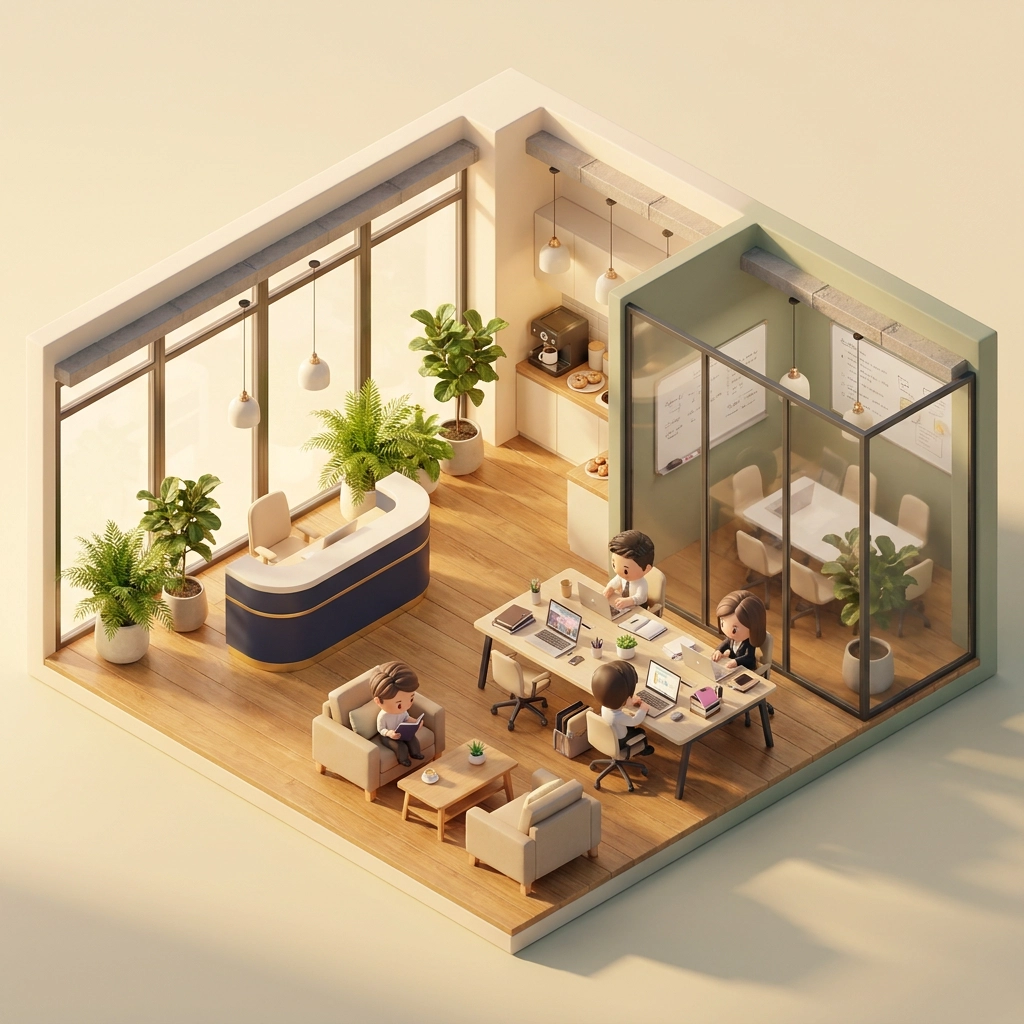
What It Actually Impacts
Productivity
A clean, well-lit, organised space reduces distraction and mental fatigue. Clutter and noise kill focus.
Wellbeing
Poor environments - bad lighting, no natural light, cramped desks, too loud or too quiet - contribute to stress, headaches, and burnout.
Collaboration
The physical layout shapes how people interact. Open areas encourage informal conversation. Meeting rooms enable structured discussion. Bad design forces people to either shout across desks or never speak at all.
Retention
People leave jobs partly because of how they feel day-to-day. A thoughtful environment signals the company respects its staff.
First Impressions
Clients, candidates, and partners judge your organisation the moment they walk in.
What Makes a good office environment
Natural light - biggest single factor for mood and energy
Temperature control - sounds basic, but constant battles over the thermostat are a real morale drain
Quiet zones and collaboration zones - not everyone needs the same thing at the same time
Clean, maintained spaces - broken chairs and dirty kitchens send a message
Autonomy - people being able to adjust their setup, sit where suits them
In a Project Context
Projects involve high-pressure, deadline-driven work. A PM needs their team focused, communicating clearly, and not burning out. The environment is part of making that possible. it's not a luxury, it's infrastructure.



Comments